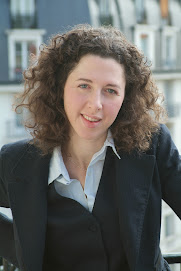
Nicolas Sarkozy’s son Jean is at the center of a national controversy after he was attacked by a satirist for allegedly planning to convert to Judaism.
In his article, cartoonist Siné mocked the precautious political agenda of Jean Sarkozy, who’s an elected official at 21 and implied the young man decided to wed a Jew and convert to Judaism in order to push forward his career.
“Jean Sarkozy, the natural son of his father and already councillor within his party, who was discharged at court in a hit and run accident with his motorbike. [...] Well, one must stress that the plaintiff was an Arab! And that’s not all: he just announced that he will convert to Judaism before marrying his fiancée, a Jew, and heiress of the founders of the Darty stores. This boy has some future!” wrote Siné on the July 9 issue of Charlie Hebdo satirical newspaper, which had not been reviewed by the newsroom.
The affair could have gone unnoticed but journalist Claude Askolovitch denounced it as anti-Semitic and the newspaper’s manager Philippe Val agreed and requested an official printed excuse from the satirist. But the latter refused.
“Saying I’m sorry to Sarkozy and Darty? I might as well cut off my balls,” he replied, before being fired by Val.
The cartoonist got support from various public figures who argued he had the right to express himself. 3.000 people signed the petition in favour of Siné. They say the manager has double standards, because Charlie Hebdo’s satirical attitude is renowned. The newspaper had published the Danish cartoons of Prophet Muhammad and was sued for doing so by various Muslim associations. Philippe Val pleaded for hours in court in favour of the controversial drawings.
But Val says “criticizing religion, any religion, is not the same as criticizing someone for what they are.” “That is an unspoken rule at Charlie Hebdo” he wrote in a column a week after the controversy broke out. He added that Sarkozy’s conversion to Judaism was a mere rumour.
French news papers are divided on the issue but most of them criticize Siné and point out that he had, in the past, been condemned for anti-Semitic remarks.
Those who defend the cartoonist say that he was fired for his far-left, pro-Palestinian political views and that his latest article was merely an excuse. They accuse Val of harassing his employees and defending pro-Israeli positions.
The Jewish umbrella group CRIF issued a press release in support of Val saying the controversy had turned into a hate campaign against the editor. Intellectual Bernard-Henri Levy wrote that people are focusing on Val’s decision to fire the cartoonist instead of trying to understand why Siné’s remarks were anti-Semitic.
Wednesday, 6 August 2008

Friday, 18 July 2008
Paris welcomes Assad — but Syrian leader snubs Olmert
Syrian leader Bashar Assad was a controversial guest of honour at France’s Bastille Day celebrations — and snubbed his fellow guest, Israeli Prime Minister Ehud Olmert.
Mr Assad was among more than 40 heads of state at Sunday’s launch of the Union for the Mediterranean, a French initiative to bring together the 27 states of the EU with the Balkans and their Arab neighbours.
His presence in the front row of dignitaries watching the military parade the next day, one seat away from President Nicolas Sarkozy, created unease among opposition leaders, human-rights activists and members of the Jewish community.
French military veterans were also angered because Syria is accused of orchestrating a 1983 attack that killed 58 French troops in Beirut. Several human-rights activists were arrested as they tried to protest.

“Bastille Day is tainted by controversy,” said Socialist leader François Holland.
French Foreign Minister Bernard Kouchner himself said last month that he was displeased by Mr Assad’s invitation. Former president Jacques Chirac, who had been a close friend of slain former Lebanese prime minister Rafik Hariri — in whose murder Damascus has been implicated — chose not to attend the parade.
But for Mr Sarkozy, inviting Mr Assad to Paris was not negotiable. “Someone has to take chances,” Mr Sarkozy told a press conference, explaining a U-turn in French policy. He hopes that Syria will turn moderate once it emerges from its isolation, and hopes to launch direct talks between Jerusalem and Damascus.
However, despite weeks of feverish speculation ahead of the summit, there was no handshake between the Syrian and Israeli leaders.
On Bastille Day, Mr Olmert and Mr Assad were filmed on the stage, inches away from each other, but although Mr Olmert looked at Mr Assad, the latter avoided eye contact, let alone a handshake.
A French journalist told Mr Sarkozy at the summit’s press conference that Mr Assad had left the assembly before Mr Olmert’s speech, and that his foreign minister, Walid al-Moualem, left before Israeli foreign minister Tzipi Livni’s address. Mr Sarkozy said he “hadn’t noticed”, and Egyptian President Hosni Mubarak responded: “So what? Assad probably had other things to do.”
Overlooking the critics, Mr Sarkozy said his initiative was a great success because of the European and Arab states which participated in the summit alongside Israel. Still, the only practical measures agreed were a handful of projects including taking action against pollution in the region and improving shipping routes.
Mr Sarkozy also announced he will visit Syria during the summer.
Mr Assad was among more than 40 heads of state at Sunday’s launch of the Union for the Mediterranean, a French initiative to bring together the 27 states of the EU with the Balkans and their Arab neighbours.
His presence in the front row of dignitaries watching the military parade the next day, one seat away from President Nicolas Sarkozy, created unease among opposition leaders, human-rights activists and members of the Jewish community.
French military veterans were also angered because Syria is accused of orchestrating a 1983 attack that killed 58 French troops in Beirut. Several human-rights activists were arrested as they tried to protest.
“Bastille Day is tainted by controversy,” said Socialist leader François Holland.
French Foreign Minister Bernard Kouchner himself said last month that he was displeased by Mr Assad’s invitation. Former president Jacques Chirac, who had been a close friend of slain former Lebanese prime minister Rafik Hariri — in whose murder Damascus has been implicated — chose not to attend the parade.
But for Mr Sarkozy, inviting Mr Assad to Paris was not negotiable. “Someone has to take chances,” Mr Sarkozy told a press conference, explaining a U-turn in French policy. He hopes that Syria will turn moderate once it emerges from its isolation, and hopes to launch direct talks between Jerusalem and Damascus.
However, despite weeks of feverish speculation ahead of the summit, there was no handshake between the Syrian and Israeli leaders.
On Bastille Day, Mr Olmert and Mr Assad were filmed on the stage, inches away from each other, but although Mr Olmert looked at Mr Assad, the latter avoided eye contact, let alone a handshake.
A French journalist told Mr Sarkozy at the summit’s press conference that Mr Assad had left the assembly before Mr Olmert’s speech, and that his foreign minister, Walid al-Moualem, left before Israeli foreign minister Tzipi Livni’s address. Mr Sarkozy said he “hadn’t noticed”, and Egyptian President Hosni Mubarak responded: “So what? Assad probably had other things to do.”
Overlooking the critics, Mr Sarkozy said his initiative was a great success because of the European and Arab states which participated in the summit alongside Israel. Still, the only practical measures agreed were a handful of projects including taking action against pollution in the region and improving shipping routes.
Mr Sarkozy also announced he will visit Syria during the summer.
Friday, 27 June 2008
Ethnic gangs raise new fear in Paris

By Dana Gloger and Shirli Sitbon in Paris
As the latest young Jewish victim of a violent attack in France woke up from his coma on Monday, debate was reignited on the safety and future of the county’s Jewish community.
Rudy Haddad, 17, was beaten by up to 15 teenagers of African origin in an incident initially described by French authorities as antisemitic. One Arab teen beat Haddad with crutches. Others kicked and jumped on him. None of the suspects have been located yet.
The attack took place in Paris’s multi-ethnic 19th district, which has large Jewish, Arab and black populations.
It comes just three months after Mathieu Roumi, 19, whose father is Jewish, was attacked, held hostage and tortured in the Bagneux suburb of the French capital.
During his ordeal, his captors scrawled “Dirty Jew” on his forehead using correction fluid. Bagneux was also where Ilan Halimi, 23, was kidnapped and tortured two years ago. The telephone salesman had been held captive for three weeks in a crime which both police and Nicolas Sarkozy (then France’s interior minister) described as antisemitic. Mr Halimi died of his injuries shortly after, and the incident sparked fears of surging antisemitism in France, home to around 600,000 Jews.
In the latest incident, Police have revealed that the beating was preceded by gang fights in which two other Jewish teens were injured. According to witnesses questioned by police, Haddad took part in the last scuffle and was caught by his attackers while he was trying to flee the area. Witnesses say he slipped between two cars, while his friends managed to escape. Mr Haddad had been involved in a fight on a previous occasion after a rally for the release of Israeli soldiers Gilad Shalit, Ehud Goldwasser and Eldad Regev.
Public prosecution opened an investigation on attempted murder charges with an anti-Semitic factor. Chief prosecutor Jean-Claude Marin said investigators have ruled out the isolated attack theory.
Whatever the cause, the incident has provoked renewed debate in France about the safety of the Jewish community, with fears expressed that Saturday’s attack is indicative of a rising tide of antisemitism.
“We issued warnings earlier this month regarding dangerous gangs in this multi-ethnic quarter of Paris,” said Sammy Ghozlan, of the Vigilance Bureau against antisemitism. "The community doesn't understand why the media does not describe the attack as anti-Semitic but as a gang fight."
Even President Sarkozy, who was in Israel this week for a state visit, expressed his concern. Speaking at a dinner in Jerusalem, he said: “I was particularly shocked by what happened to a young Frenchman because he was wearing a kippah. Battling antisemitism concerns all French people, whether they are Jews or not.” He added that antisemitism was “a stain on the tricolour flag”.
Ariel Goldman, head of security for CRIF, the Representative Council for French Jews, said that Jewish people in the country, particularly those in northern Paris, had been left shocked and worried by the attack on Rudy Haddad.“Although everybody has to wait to see what conclusions the police will make, what is evident is that a young Jewish boy wearing a kippah had been attacked and very seriously hurt. People are now very upset and worried.”
One of Mr Haddad’s friends, who did not want to be named, said: “It is very difficult thinking about what happened. We are all very scared. There is violence like this against Jewish people all the time, and it is very hard.”
Most of France’s communal leaders stressed that while Jewish people in the country were safe, and that antisemitism had decreased in recent years, the nature of such attacks had become increasingly violent, leaving people ever more fearful.Serge Cwajgenbaum, of the European Jewish Congress, explained that the past year had seen a decrease in antisemitic incidents overall, but a rise in violent incidents. “It makes people very worried. While people are not necessarily more frightened of walking in the streets, parents are scared to send their children to a Jewish school for example, in case they are attacked.”He added that attacks such as the one on Rudy Haddad created a strong perception of rising antisemitism.
Guy Rosanowitz, who presents a talk show on France’s Jewish radio station Radio J in which callers discuss their concerns and recent events, agreed with Mr Cwajgenbaum.“Previously, when there have been attacks on Jewish people, there was a lot of talk about leaving the country to go to Israel or the US. This time, people aren’t saying this, but they are nervous after what has happened, especially as it’s not the first time that attacks like this have happened in these parts of Paris.” He added: “It generally concerns religious people more, and there has been some discussion of whether it’s best to wear a hat rather than a kippah in public.”
Others, however, claimed that the incident has not caused fear among the Orthodox community. Rabbi Hillel Benhamou, secretary of the Beit Loubavitch Centre in Paris, said: “It has not caused Lubavitch people to be any more worried about walking down the streets in their hats, or religious clothes. People are upset about what’s happened, but they are not scared to walk down the streets.” He added that the community’s main concern was how the incident would affect racial and religious tensions among young people.
Meanwhile, Raphael Haddad, president of the French Union of Jewish Students, said that, given the news that Rudy Haddad had been involved in previous fights, it was no longer clear if Saturday’s attack had been entirely antisemitic in nature.
He rejected suggestions that French Jews felt under threat: “People are not scared. They feel safer than they did two or three years ago.”One of the causes of the problem, according to Raphael Haddad, was that in the 19th district, groups of Jewish and non-Jewish youths “fight in the park every Saturday afternoon”.
France elects chief rabbi in US-style vote

France elected a new chief rabbi on Sunday after a lengthy presidential-style campaign described by one communal figure as “an unprecedented battle between two radically different characters”.
The victor, Chief Rabbi Gilles Bernheim, the 56-year-old rabbi of Paris’s La Victoire Synagogue, beat Chief Rabbi Joseph Haïm Sitruk, 63, who led the French rabbinate for 21 years.
According to communal figures, the election had “turned American”, with a campaign that included video clips on the internet showing the younger rabbi jogging through Paris, comments on social-networking site Facebook, and advertising in the Jewish press. France’s main communal organisation, the Consistoire, responsible for electing the chief rabbi, had never seen such effort and cash invested in an election. One of the 300 members eligible to vote said: “I never got so many phone calls. The chief rabbi [Sitruk] himself left a message on my mobile phone and asked what he could do for me to get my support.”
Rabbi Sitruk was seen as the traditional candidate, “friendly and always ready to tell a joke”, and with a keen interest in business opportunities, such as the launch — during his term of office — of his own kashrut label in competition with the Consistoire label, a move which provoked fierce criticism.
A philosopher and academic, Chief Rabbi Bernheim is widely regarded as an intellectual. However, his supporters say his main quality is his inclusivity. “Bernheim is an open man,” said Jacques Garih, president of the Future of Judaism association. “Let’s face it, 99 per cent of the French are not Jewish, so it’s quite important to have interfaith dialogue. And he’s also open to Jews who are not Orthodox.” He is also expected to resolve the problems facing the Consistoire: “It is going through a tough crisis because Sitruk didn’t take matters in hand and Bernheim presented a serious programme to get the Consistoire back on track and improve its rabbinical school,” said religious and social-studies scientist Martine Cohen. “And Bernheim doesn’t address men exclusively. This is further progress.”
After his victory on Sunday, Rabbi Bernheim told Rabbi Sitruk that “it was time to unite” and offered to “work together”. One of Rabbi Sitruk’s students shed a tear. And as one voter told the JC, “the election was some show”.
Monday, 23 June 2008
Gang beats Jewish adolescent to a coma - all leads investigated
A 17-year-old Jewish adolescent, Rudy Haddad, was beaten to a coma by a group of adolescents on Saturday night in the north of Paris in an attack initially described as anti-Semitic by French authorities.
“A gang of 15 adolescents attacked the young Jew with metal bars as he was walking down the street wearing a skullcap,” Sammy Ghozlan, from the Vigilance Bureau against anti-Semitism, told the JC. “We have issued warnings earlier this month regarding dangerous gangs in this multi-ethnic quarter of Paris.”
French President Nicolas Sarkozy said “the aggressors had to be severely punished”. However, police has yet to determine the exact circumstances of the incident.
The attack occurred in a neighbourhood where rival black, Arab and Jewish gangs confront each other regularly and police revealed that Saturday’s beating was preceded by scuffles, apparently over a stolen motorbike.
They also revealed that Haddad had, in the past, participated in a fight and investigators are trying to determine whether the boy, who came out of the coma on Monday, took part in the street fights that preceded his beating.
“The exact motives of the assault haven’t been determined yet,” said police sources.
France’s new chief rabbi Gilles Bernheim said “investigators had to complete their inquiry” but evaluated that “there is no doubt the attack was anti-Semitic”.
Police have detained five black adolescents spotted during the beating.
Racial violence and anti-Semitic assaults committed by ethnic minorities have multiplied in France in recent years.
In 2006, a gang kidnapped and killed 23-year-old phone salesman Ilan Halimi. In 2003, only streets away from the area where Haddad was attacked on Saturday, 23-year-old DJ Sébastien Selam was murdered by his neighbour who told police he would go to heaven because he killed a Jew. The murderer pleaded insanity.
There’s an ongoing debate over Jewish gangs, such as the Jewish Defence League and Beitar, which confront other gangs in the Paris area. One of JDL’s leaders, who presents himself as Michael Carlisle, told me in April that his gang participated in street battles but he said JDL only “fought against gangs that threaten Jews”.
The Jewish community has never openly condemned gangs such as JDL, although the topic was debated in April in the national and Jewish press.
“A gang of 15 adolescents attacked the young Jew with metal bars as he was walking down the street wearing a skullcap,” Sammy Ghozlan, from the Vigilance Bureau against anti-Semitism, told the JC. “We have issued warnings earlier this month regarding dangerous gangs in this multi-ethnic quarter of Paris.”
French President Nicolas Sarkozy said “the aggressors had to be severely punished”. However, police has yet to determine the exact circumstances of the incident.
The attack occurred in a neighbourhood where rival black, Arab and Jewish gangs confront each other regularly and police revealed that Saturday’s beating was preceded by scuffles, apparently over a stolen motorbike.
They also revealed that Haddad had, in the past, participated in a fight and investigators are trying to determine whether the boy, who came out of the coma on Monday, took part in the street fights that preceded his beating.
“The exact motives of the assault haven’t been determined yet,” said police sources.
France’s new chief rabbi Gilles Bernheim said “investigators had to complete their inquiry” but evaluated that “there is no doubt the attack was anti-Semitic”.
Police have detained five black adolescents spotted during the beating.
Racial violence and anti-Semitic assaults committed by ethnic minorities have multiplied in France in recent years.
In 2006, a gang kidnapped and killed 23-year-old phone salesman Ilan Halimi. In 2003, only streets away from the area where Haddad was attacked on Saturday, 23-year-old DJ Sébastien Selam was murdered by his neighbour who told police he would go to heaven because he killed a Jew. The murderer pleaded insanity.
There’s an ongoing debate over Jewish gangs, such as the Jewish Defence League and Beitar, which confront other gangs in the Paris area. One of JDL’s leaders, who presents himself as Michael Carlisle, told me in April that his gang participated in street battles but he said JDL only “fought against gangs that threaten Jews”.
The Jewish community has never openly condemned gangs such as JDL, although the topic was debated in April in the national and Jewish press.
Friday, 20 June 2008
Sarkozy gets cosy with Assad

Jewish institutions and opposition parties have criticised the welcome extended by French Prime Minister Nicolas Sarkozy to Syrian leader Bashar Assad to the summit launching the Med Union on July 13 and to the next day’s Bastille Day celebrations.
“It is not the invitation to the summit itself we are criticising, but the honours given to Assad the next day when he’ll be the nation’s guest at the presidential tribune for the national celebration,” a spokesman for the Jewish umbrella body CRIF told the JC.
But the invitation is seen by others as an opportunity to push negotiations with Syria further after Jerusalem and Damascus revealed their own indirect talks.
Paris has sent two emissaries to Damascus, among them Jean-David Lavitte, France’s former ambassador to the US.
“If the Israelis are talking to the Syrians… let’s not be too smart about things, I think it’s important to talk to people on opposite sides,” said French Foreign Minister Bernard Kouchner.
“If Sarkozy obtained information about developments and a change in the Syrian approach, then there could be a breakthrough,” political analyst Raphael Drai told the JC.
“But this diplomatic effort will be very complex and difficult to push through.
“There are in fact three negotiations in one: there’s the Israeli-Syrian process, the Lebanon issue, and the attempt to draw Syria away from Iran. Syrians argue that if they accept western demands and move away from Iran, they should at least get in return major advantages in Lebanon and land restitution from Israel in the Golan.”
According to Reuters, Israeli officials said Jerusalem was trying to set up a meeting between Mr Assad and Israeli Prime Minister Ehud Olmert, who will participate in the same events on July 13-14. The Israeli embassy in France told the JC it did not wish to comment on the media reports and that it was currently focusing on Mr Sarkozy’s own trip to Jerusalem, due to take place in a few days.
“It is not the invitation to the summit itself we are criticising, but the honours given to Assad the next day when he’ll be the nation’s guest at the presidential tribune for the national celebration,” a spokesman for the Jewish umbrella body CRIF told the JC.
But the invitation is seen by others as an opportunity to push negotiations with Syria further after Jerusalem and Damascus revealed their own indirect talks.
Paris has sent two emissaries to Damascus, among them Jean-David Lavitte, France’s former ambassador to the US.
“If the Israelis are talking to the Syrians… let’s not be too smart about things, I think it’s important to talk to people on opposite sides,” said French Foreign Minister Bernard Kouchner.
“If Sarkozy obtained information about developments and a change in the Syrian approach, then there could be a breakthrough,” political analyst Raphael Drai told the JC.
“But this diplomatic effort will be very complex and difficult to push through.
“There are in fact three negotiations in one: there’s the Israeli-Syrian process, the Lebanon issue, and the attempt to draw Syria away from Iran. Syrians argue that if they accept western demands and move away from Iran, they should at least get in return major advantages in Lebanon and land restitution from Israel in the Golan.”
According to Reuters, Israeli officials said Jerusalem was trying to set up a meeting between Mr Assad and Israeli Prime Minister Ehud Olmert, who will participate in the same events on July 13-14. The Israeli embassy in France told the JC it did not wish to comment on the media reports and that it was currently focusing on Mr Sarkozy’s own trip to Jerusalem, due to take place in a few days.
Monday, 16 June 2008
Slander star loses slander case
Is slander time over for French controversial comedian Dieudonne ?
Over the past 5 years, the enigmatic figure of Dieudonné M'bala M'bala, better known as Dieudo, turned from a sympathetic popular actor teamed up with Jewish comic Eli Semoun into an obsessed anti-Zionist militant portraying Jews as soulless gold diggers.
Today (July 17) - he lost a libel suit against Jewish lawmaker Julien Dray. Dieudonné accused Dray of slander after the latter said he was indirectly responsible for the murder of 23-year-old Jewish salesman Ilan Halimi in 2006.
Dieudonné, was one of the local Jewish community’s most preoccupying problems over the past few years. He represented the new anti-Semite who could freely attack Jews using the anti-Zionist arena. The problem was that he had the popularity, stage and screens to spread his message and that because he is a black man no one would suspect him of true hatred.
The big blow occurred in December 2003 with an unexpected sketch in which Dieudonne was disguised as a Nazi orthodox Jew on a TV talk show. Dieudonné executed a Nazi salute while saying “Isra-heil”. The aftershock came the next day, when the Jewish community realised nobody else was moved by his performance.
Dieudonné’s portrait of Jews, accusing them of orchestrating the slave trade and spreading AIDS in Africa, instilled new hatred against the community.
An anti-Semitic black gang called the Tribu Ka met at Dieudonné’s theatre and later threatened Jews in various occasions.
A young black man who came to a meeting for Judeo-Black friendship told me he heard that Jews had been slave traders and he didn’t know whether to believe it or not. “Is Dieudonné right? Nobody tells me otherwise.”
Jewish associations tried to take legal action and put a stop to Dieudonnée’s slander campaign, but lost their case each time.
All that changed two years ago, when Dieudonné made a few major mistakes that revealed his true intentions. The main one was his meeting with extremist leader Jean-Marie Le Pen. Their handshake shed a new light on Dieudonné, and cut his bond with the mainstream black community.
And now he is quite alone.
Jews: "slave traders turned into finance sharks"
I saw him in court several weeks ago during his trial against Jewish MP and Socialist party spokesperson Julien Drai who had accused him of being indirectly responsible for the kidnapping and murder of young Jewish phone salesman Ilan Halimi by a gang in February 2006.
The gang said it had kidnapped Halimi “because he was Jewish and Jews have money.”
It went to the center of Paris on a Saturday and checked which stores were closed. The following days the gang sent girls to hit on phone salesmen in these shops, figuring they would be Jewish, and that their kidnapping would generate easy cash.
According to Drai, Dieudonné had indirect responsibility in this tragedy because he spread these old stereotypes on Jews.
Dieudonné said he was shocked and that his life changed the day Drai pronounced his accusations.
“People attacked me in the streets accusing me of Ilan’s abduction. It’s all your fault!” said Dieudonné in court.
“It’s not my fault, it is the result of all of your repeated actions and declarations!” answered Julien Drai.
Dieudonné looked at the judge and said “He doesn’t realize the consequences of his words. I was physically attacked.”
And the judge answered “Oddly enough, this is precisely what Julien Drai is accusing you of : triggering violence with your declarations.”
Today the court discharged Dray.
Over the past 5 years, the enigmatic figure of Dieudonné M'bala M'bala, better known as Dieudo, turned from a sympathetic popular actor teamed up with Jewish comic Eli Semoun into an obsessed anti-Zionist militant portraying Jews as soulless gold diggers.
Today (July 17) - he lost a libel suit against Jewish lawmaker Julien Dray. Dieudonné accused Dray of slander after the latter said he was indirectly responsible for the murder of 23-year-old Jewish salesman Ilan Halimi in 2006.
Dieudonné, was one of the local Jewish community’s most preoccupying problems over the past few years. He represented the new anti-Semite who could freely attack Jews using the anti-Zionist arena. The problem was that he had the popularity, stage and screens to spread his message and that because he is a black man no one would suspect him of true hatred.
The big blow occurred in December 2003 with an unexpected sketch in which Dieudonne was disguised as a Nazi orthodox Jew on a TV talk show. Dieudonné executed a Nazi salute while saying “Isra-heil”. The aftershock came the next day, when the Jewish community realised nobody else was moved by his performance.
Dieudonné’s portrait of Jews, accusing them of orchestrating the slave trade and spreading AIDS in Africa, instilled new hatred against the community.
An anti-Semitic black gang called the Tribu Ka met at Dieudonné’s theatre and later threatened Jews in various occasions.
A young black man who came to a meeting for Judeo-Black friendship told me he heard that Jews had been slave traders and he didn’t know whether to believe it or not. “Is Dieudonné right? Nobody tells me otherwise.”
Jewish associations tried to take legal action and put a stop to Dieudonnée’s slander campaign, but lost their case each time.
All that changed two years ago, when Dieudonné made a few major mistakes that revealed his true intentions. The main one was his meeting with extremist leader Jean-Marie Le Pen. Their handshake shed a new light on Dieudonné, and cut his bond with the mainstream black community.
And now he is quite alone.
Jews: "slave traders turned into finance sharks"
I saw him in court several weeks ago during his trial against Jewish MP and Socialist party spokesperson Julien Drai who had accused him of being indirectly responsible for the kidnapping and murder of young Jewish phone salesman Ilan Halimi by a gang in February 2006.
The gang said it had kidnapped Halimi “because he was Jewish and Jews have money.”
It went to the center of Paris on a Saturday and checked which stores were closed. The following days the gang sent girls to hit on phone salesmen in these shops, figuring they would be Jewish, and that their kidnapping would generate easy cash.
According to Drai, Dieudonné had indirect responsibility in this tragedy because he spread these old stereotypes on Jews.
Dieudonné said he was shocked and that his life changed the day Drai pronounced his accusations.
“People attacked me in the streets accusing me of Ilan’s abduction. It’s all your fault!” said Dieudonné in court.
“It’s not my fault, it is the result of all of your repeated actions and declarations!” answered Julien Drai.
Dieudonné looked at the judge and said “He doesn’t realize the consequences of his words. I was physically attacked.”
And the judge answered “Oddly enough, this is precisely what Julien Drai is accusing you of : triggering violence with your declarations.”
Today the court discharged Dray.

A thousand Jews marched in Paris days after the Halimi murder, when police and officials kept denying it was a hate crime.
Days later, tens of thousands marched down Voltaire Boulevard, where Ilan Halimi had been approached by his kidnappers.

Subscribe to:
Posts (Atom)